Book Review: The Emotionally Destructive Marriage
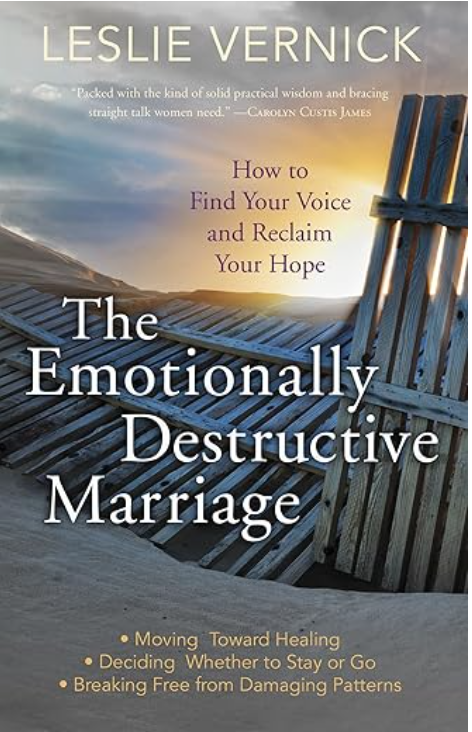
The Emotionally Destructive Marriage - By: Leslie Vernick
Sometimes a marriage isn’t just disappointing - it’s destructive. What’s the difference? Does it matter? And, if a relationship is destructive, does “being a good Christian” mean I should just submit more and try harder?
Most women have received confusing or incomplete answers - sometimes even from well-meaning church leaders.
In The Emotionally Destructive Marriage, Leslie Vernick tackles these questions head-on. She holds a high view of marriage and a high view of the dignity, safety, and spiritual well-being of the person suffering in an abusive or destructive relationship. Leslie pushes past Christian platitudes and grounds her counsel in biblical principles. She offers clear definitions, practical tools, and assessments to help distinguish between a disappointing marriage and one that is emotionally destructive. From there, she provides wise, faith-informed guidance for navigating a range of real-life scenarios.
What does a healthy adult relationship require?
Leslie teaches that thriving relationships depend on three essentials:
Mutuality — both people matter; honesty, respect, and compassion go both ways
Reciprocity — shared power, shared responsibility, and give-and-take
Freedom — the ability to be yourself, say no, and have agency without punishment
A relationship may be unhealthy or unthriving when these are missing, but (as Leslie notes) that alone doesn’t necessarily make it destructive.
What patterns often show up in destructive marriages?
Leslie identifies five destructive patterns that, when repeated, erode personhood and safety:
Reactive abuse
Controlling abuse / power imbalance and entitlement
Deceit
Chronic dependency
Chronic indifference
The core message: reclaim your voice and respond with wisdom
Leslie’s central encouragement is that women in destructive relationships can take meaningful steps forward, including:
Stop unintentionally enabling destructive patterns
Build internal strength (“core”) so you can act from courage, not panic
Prepare for hard conversations
Speak up “in love” without shaming. Pair words with clear boundaries and consequences if the destructiveness continues
She also emphasizes watching for accountability and sustained change, not just apologies, big promises, religious language, or short “good stretches.”
Why we recommend it
We found this book very helpful for women in difficult relationships who need clear categories, language, and practical tools. It’s also valuable for women who are no longer in those relationships and want help accurately naming and understanding what was happening.